Botanical fine line has a right and a wrong home on the body. Not because the design changes — but because the drawing is following bone, muscle and movement. Place a trailing stem across a joint and it fights you every time you bend. Place it along the line of the spine and it feels inevitable.
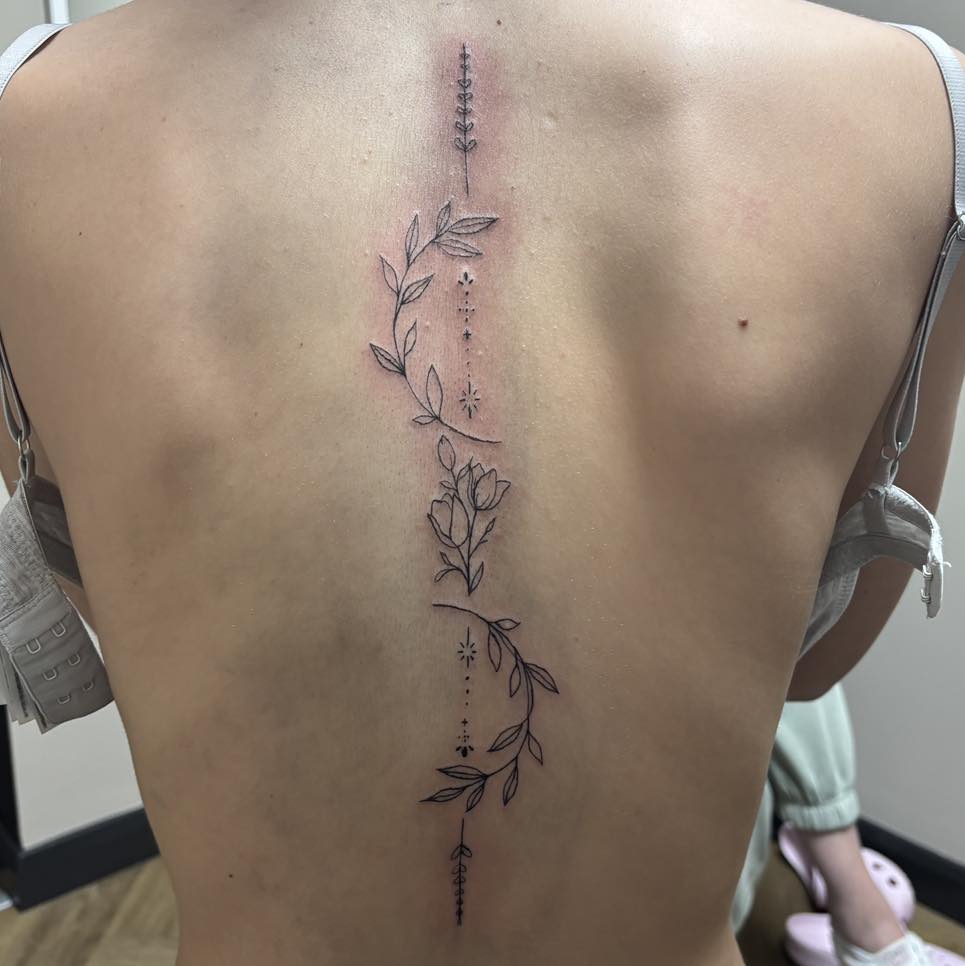
The spine
The natural runway for anything vertical and trailing — trailing florals, single stems, script and small celestial marks. Low friction, low sun exposure, ages beautifully. Sits about a 7/10 for sensation.
The ribs
Feminine, editorial, high impact. Curves with the body so botanical work reads as if it grew there. More sensitive than the spine and takes a little longer to settle — worth it.
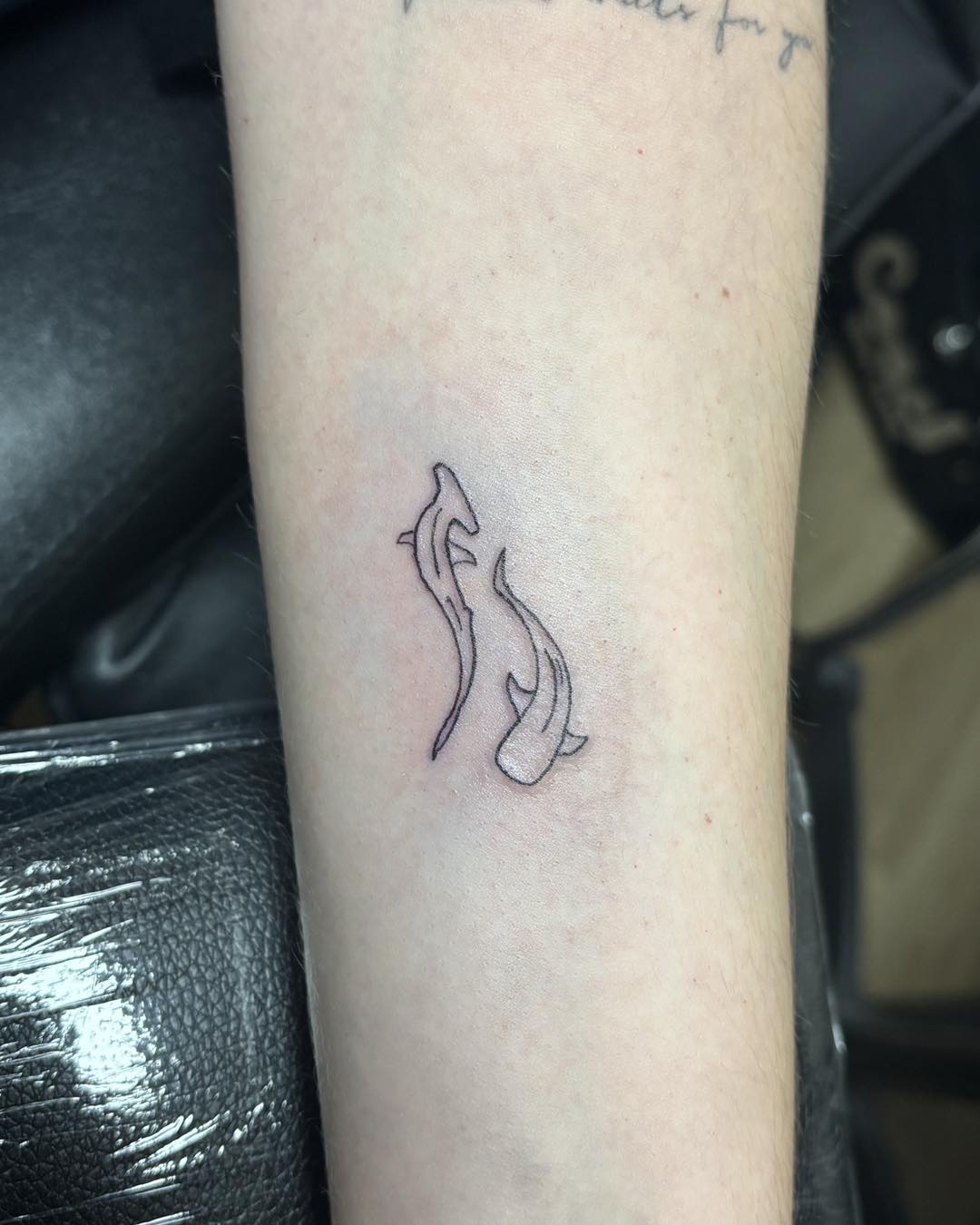
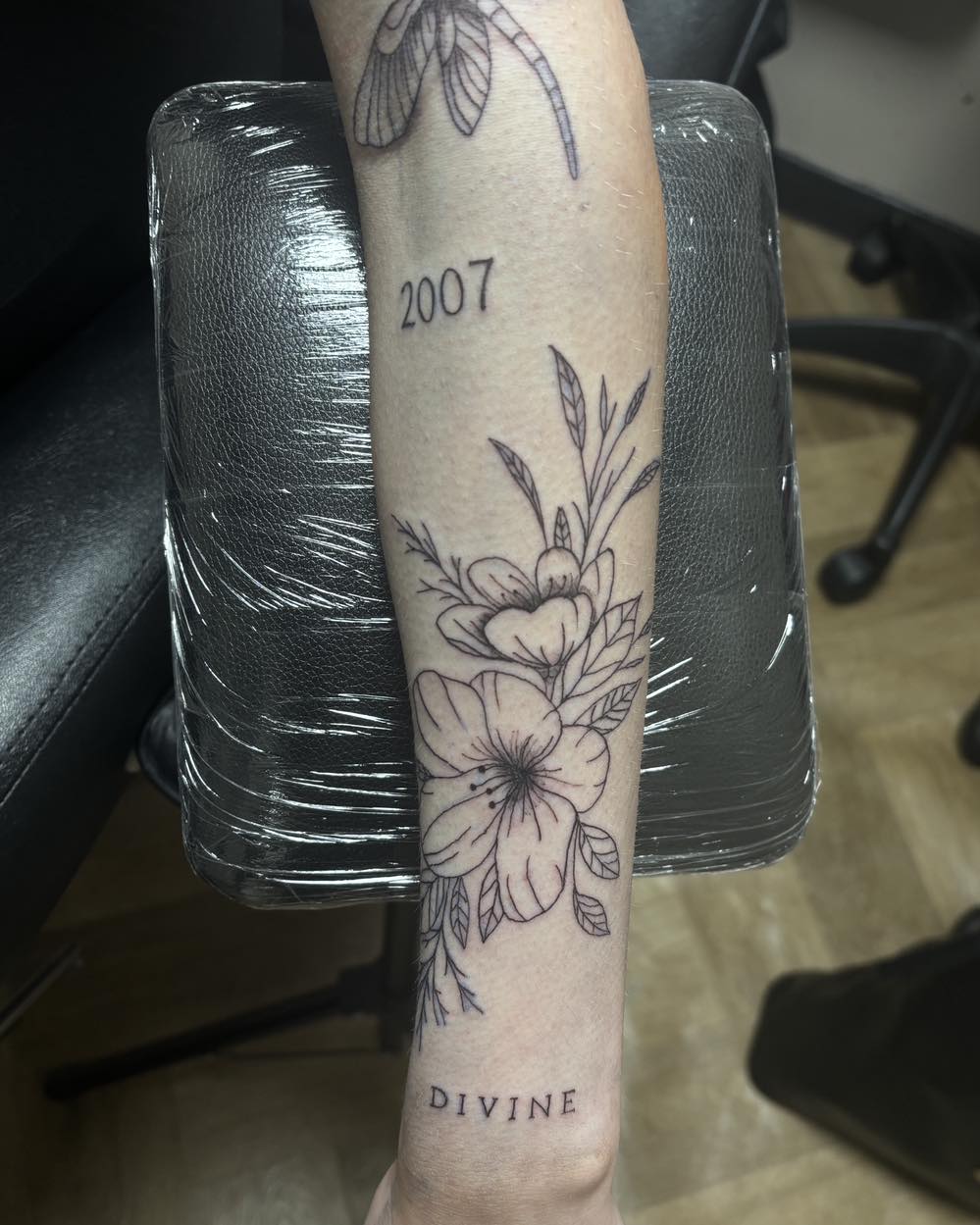
The forearm — inner and outer
The most requested botanical placement at the Rotherham studio, and for good reason. Flat plane, easy to see, easy to protect, ages exceptionally well. Inner forearm is more sensitive than outer but neither is difficult.
The ankle and inner ankle
Small delicate pieces — a stem, a couple of blossoms, initials — sit beautifully here. Note that ankles are a higher-friction placement (socks, shoes, gym) and will benefit from a touch-up sooner than a rib or spine piece.
Placements to think twice about
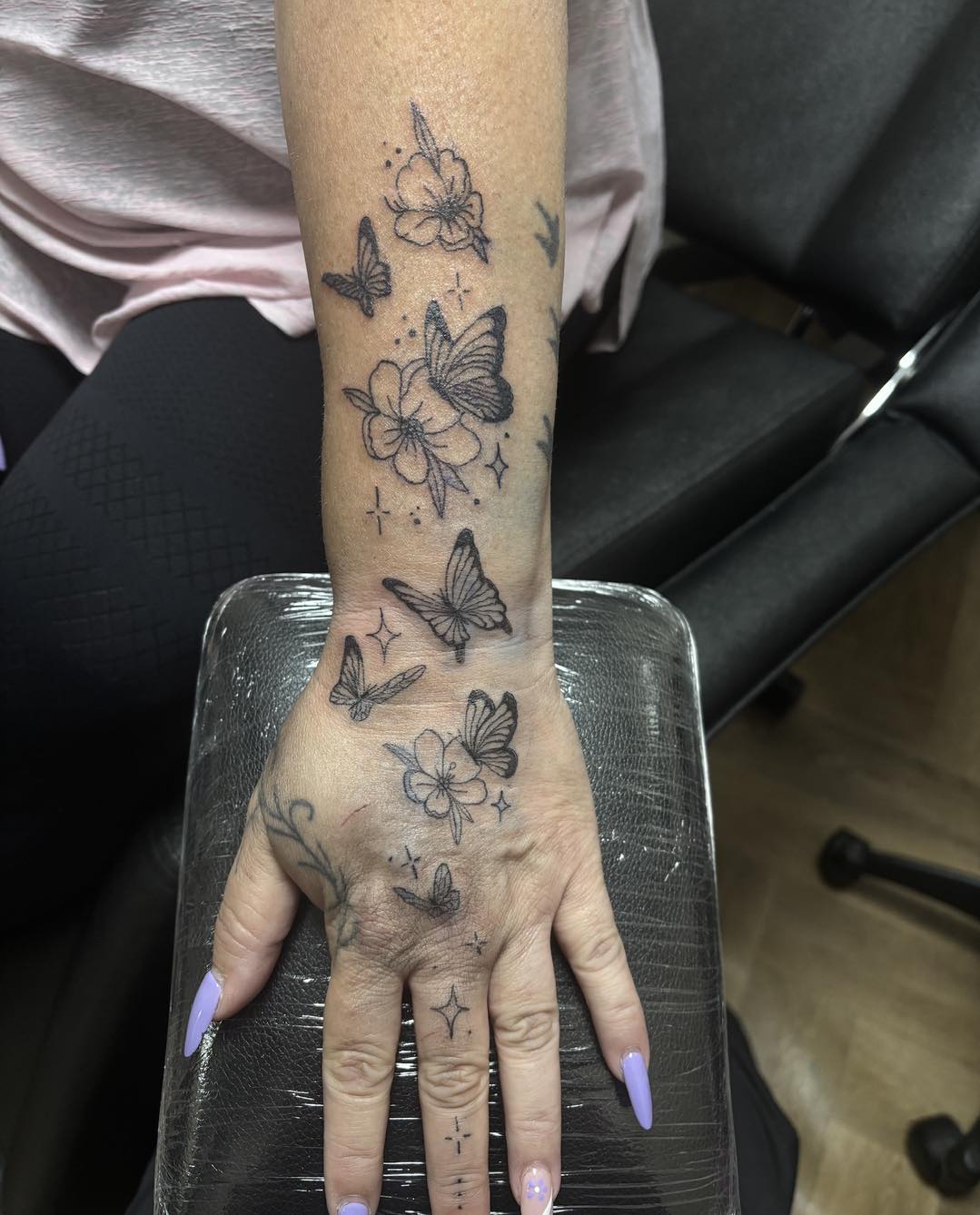
- Hands and fingers — fine line rarely holds beyond 2 years.
- Feet and inner fingers — same story.
- Elbows and knees — constant stretch will spread fine line.
- Anywhere with heavy daily sun exposure without SPF.
"The best placement is the one that lets the drawing keep drawing itself as you move."
The consultation decides it
Bring your references and Emma will map the piece to your body in Sharpie before you commit — often adjusting scale, angle or placement so the botanical follows your anatomy rather than fighting it.