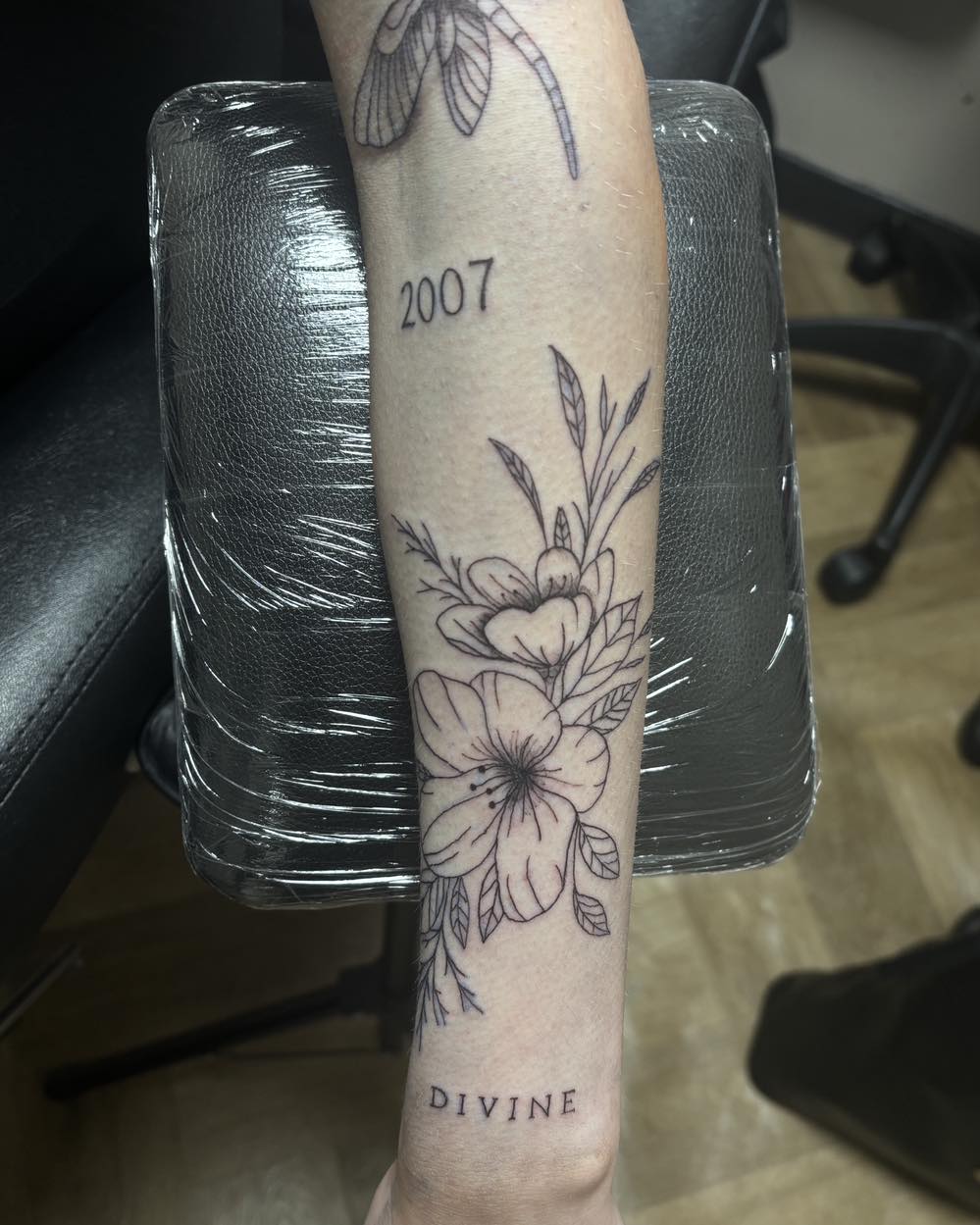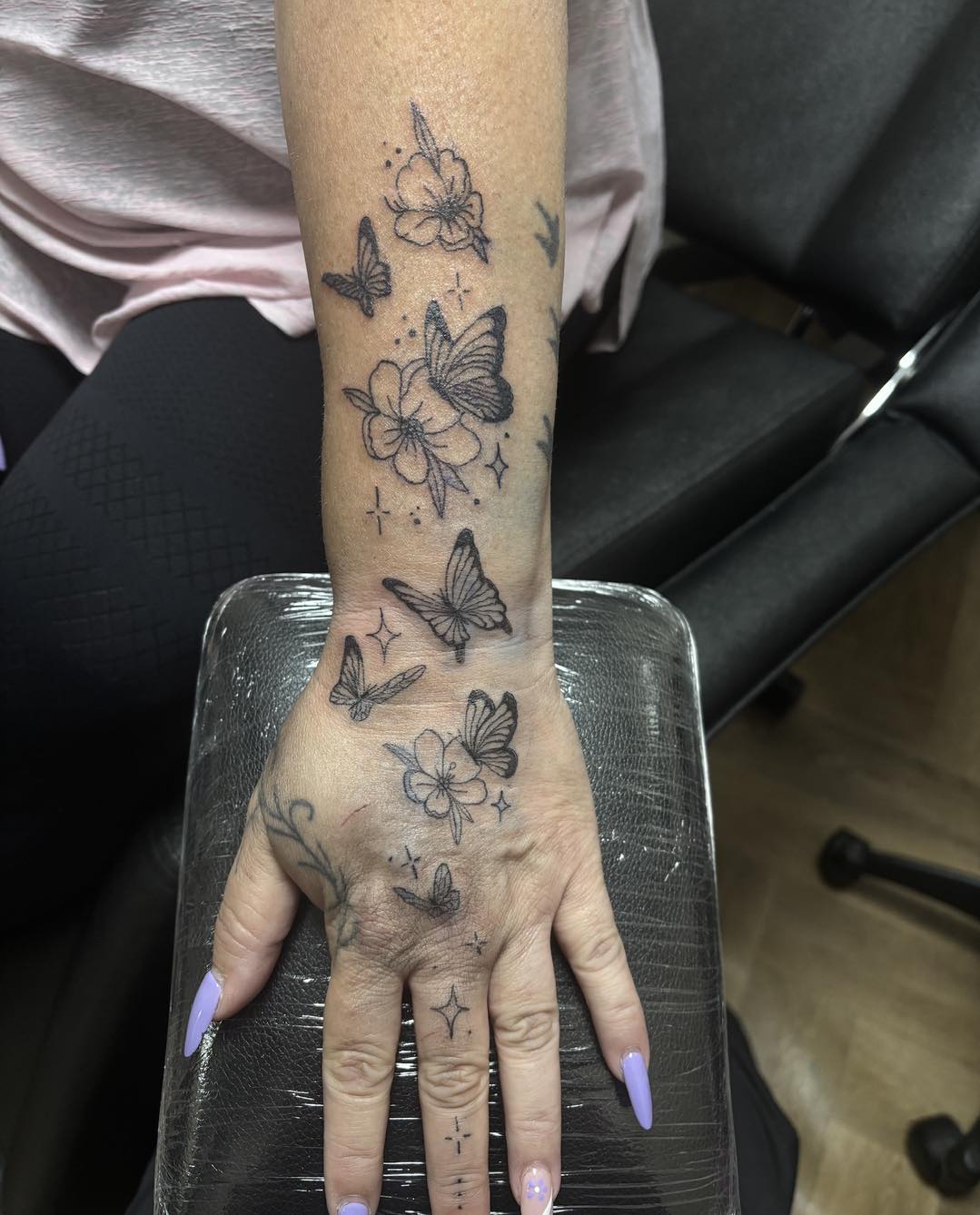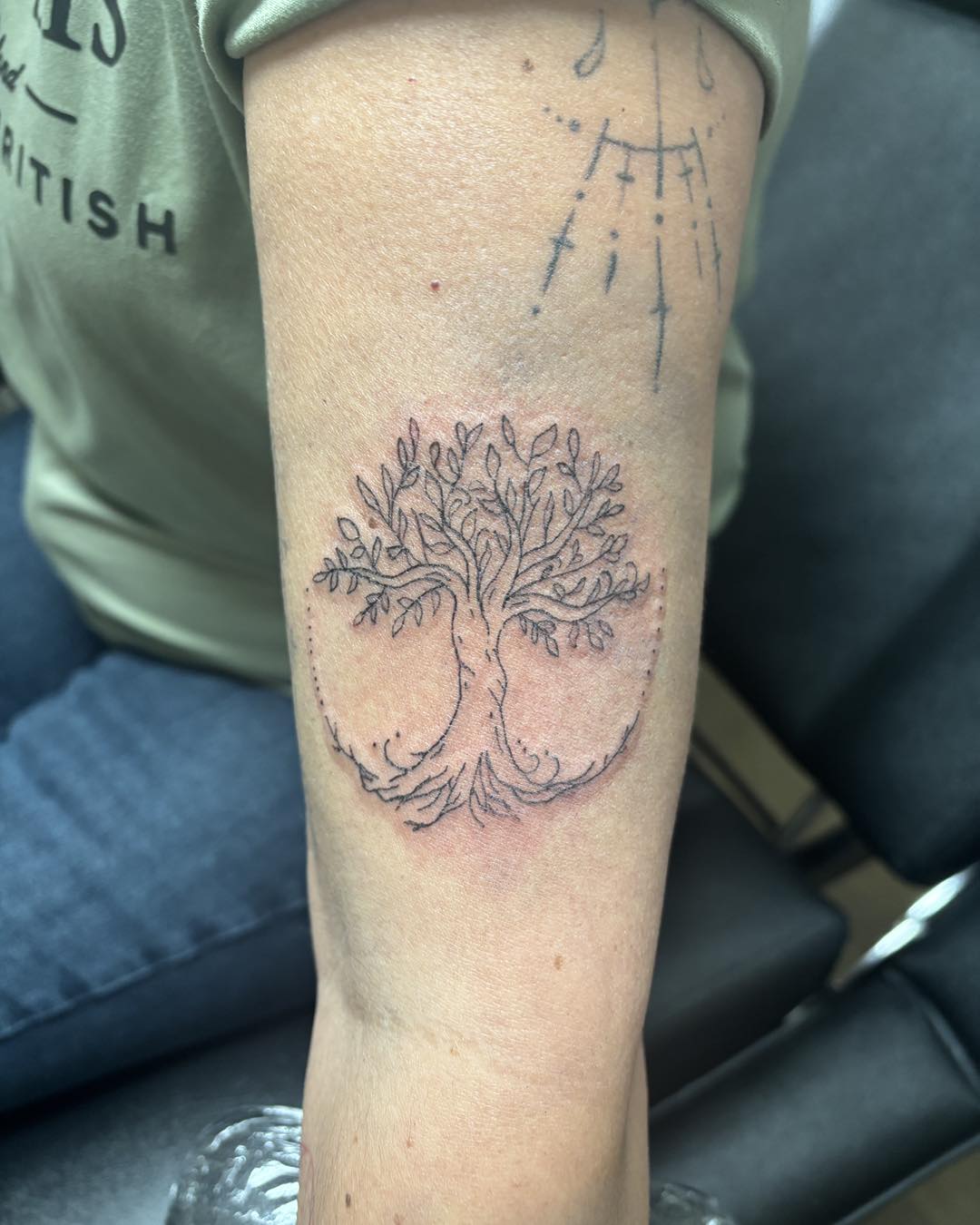
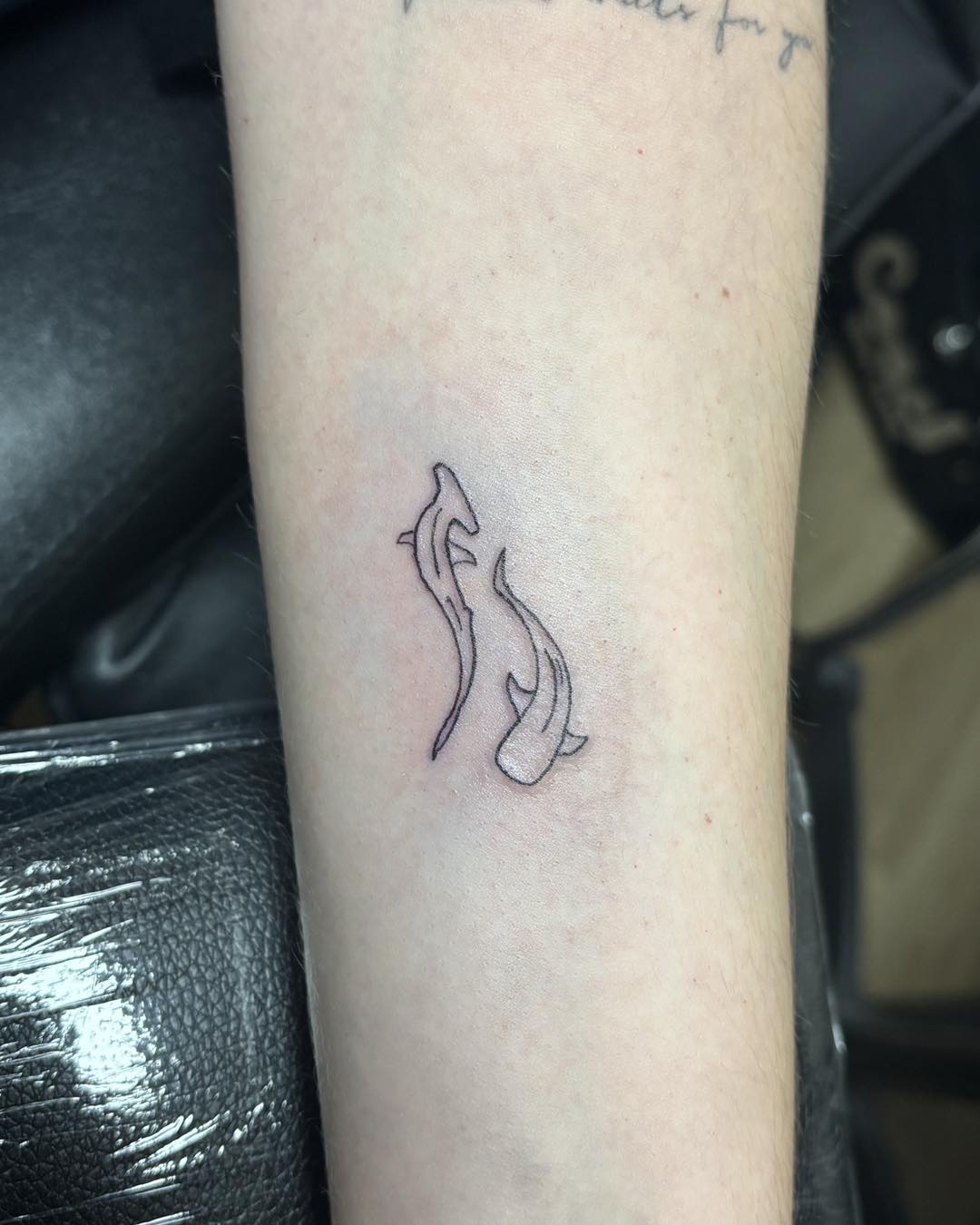
The fine line vs traditional debate isn't really an argument — it's a question of what you want on your body in twenty years. Both are legitimate, both have long histories, and both age. The difference is how.
The technique
Traditional tattooing (American traditional, neo-traditional, Japanese) uses thicker liner groupings and packed colour or black shading. It's built for legibility from across a room and for durability against decades of sun, stretch and skin change. Fine line uses a single needle, or a very tight grouping, to lay hairline weight with generous negative space. It reads as a drawing rather than a graphic.
How each ages
A well-executed traditional piece will still read at fifty years old — the lines were laid thick enough to hold as the skin softens. Fine line will always mellow more visibly: thin lines spread microscopically over time, and pieces on high-friction placements (hands, feet, inner fingers) can lose crispness within five years. Fine line on protected placements — inner arm, ribs, thigh, shoulder blade, spine — holds beautifully for decades with occasional refresh.
Which is right for you
- Choose traditional if you want maximum longevity and a bold, room-legible piece.
- Choose fine line if you want a considered, delicate drawing that sits quietly on the body.
- Choose fine line and pick your placement carefully if you want the best of both.
"A fine line tattoo isn't a lesser tattoo. It's a different intention."
The honesty test
At the Desire Ink consultation, Emma will tell you honestly if the piece you want is better suited to a different technique or placement. Sometimes a design lives longer as a small traditional icon than as a delicate botanical spread — and knowing that before you're in the chair is the whole point of a proper consultation.